Your Cart is Empty


In this article
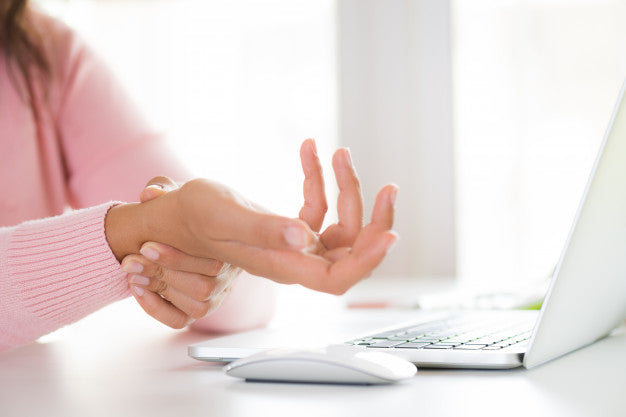
Wrist pain after months of typing, clicking or gripping is common. Two labels come up most: repetitive strain injury and carpal tunnel syndrome. They can feel similar but differ in what is happening, and the right response differs too.
Understand the two names
RSI is a term for pain caused by repeated movement. The NHS lists burning, aching or throbbing pain, stiffness, weakness, tingling, cramps and swelling, usually starting gradually in the forearm, wrist or hand. Carpal tunnel syndrome is pressure on the median nerve in the wrist; its pattern is tingling, numbness, a weak thumb and symptoms that are often worse at night. [1] [2]
Act early with the basics
For RSI, the NHS advises staying active within limits, using paracetamol or anti-inflammatory gels, applying a cold pack, and talking to your employer about changing how you work. Resting beyond a few days can weaken the area. For carpal tunnel, a night splint that keeps the wrist straight is the first-line step, alongside cutting down activities that bend the wrist or involve hard gripping. [1] [2]
Why the massage-gun routine was removed
An earlier version of this article promised immediate relief from RSI and carpal tunnel and prescribed device techniques over the wrist. That overstated the evidence. NHS carpal tunnel guidance specifically advises cutting down activities involving vibrating tools, and the main massage-gun review does not establish treatment of RSI or of nerve compression. [2] [3]
Know when to see a GP
For RSI: symptoms that are not going away or are getting worse. For carpal tunnel: worsening symptoms, or home treatment that is not working. A steroid injection can ease swelling around the nerve, and surgery is an option that usually cures CTS when other steps fail. [1] [2]
Sources and further reading
- NHS: repetitive strain injury symptoms, self-care, employer changes and when to see a GP.
- NHS: carpal tunnel syndrome symptoms, splints, steroid injections and surgery.
- 2023 massage-gun systematic review: 11 studies, short-term findings and moderate or high risk of bias.
General information, not a diagnosis or personal treatment plan. Recovapro sells recovery devices. Reviewed 14 November 2026.
Explore the range
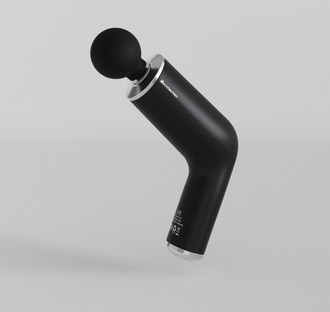
Recovapro Lite Massage Gun with Charging Mat
Percussion for your everyday routine.
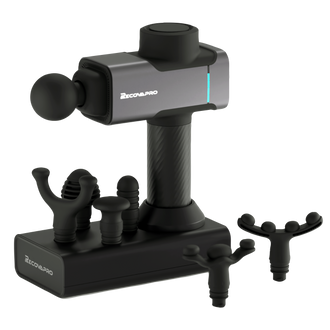
Recovapro Max with docking station
The flagship massage gun.
Explore the pain guides · Compression research and session planner