Your Cart is Empty


In this article
A seated cable row is an arms-and-back exercise, not a contest to move the largest stack. The useful starting point is a load you can move under control, with a setup that lets you stay steady. [1]
Set up before loading up
ACE describes a seated pulley cable machine with a narrow handle, feet on the floor, bent knees and a straight back. Choose a load that lets you maintain that position rather than using your torso to start every repetition. [1]
Machines differ. Ask a qualified trainer to show you the adjustments and cable route on the equipment you are using. Do not assume a different home machine has the same setup.
Pull with control, not a backwards swing
Lift the chest and slowly pull the elbows backwards close to the rib cage until the handle reaches the front of the stomach. ACE describes a brief pause before returning. Keep the movement controlled rather than jerking the handle into place. [1]
If you need to rock backwards to complete the pull, reduce the load and review the setup. Make the exercise fit a movement you can repeat, not a number you have to defend.
Finish the return as carefully as the pull
Slowly straighten the arms to return the weight to the starting position. Do not let the cable pull you into a rushed finish. The return is part of the repetition. [1]
Pause the set if your position breaks down. A trainer can help adapt the exercise if the grip, seat or range feels awkward.
Do not use soreness as the score
A difficult set and a painful movement are not the same thing. Stop for sharp or worsening pain rather than treating it as proof of effort. If pain persists or follows an injury, get appropriate advice before continuing.
This is general technique guidance, not an individual programme. It does not promise to correct posture or make one exercise safer than every alternative.
Keep a recovery tool in its own role
A 2023 systematic review included 11 massage-gun studies, ten with moderate risk of bias and one with high risk. It found possible short-term flexibility and some recovery-related benefits. This does not show that every device treats pain, heals an injury or improves sporting performance. It is not a Recovapro-specific trial. [2]
Follow the instructions for your model. If percussion is suitable, begin at low intensity with light contact on muscle, away from bones, joints, the spine, head and neck. Stop if it hurts or worsens symptoms. For an injury, medical condition or uncertainty about suitability, ask your healthcare team before using a device. [3] [4]
Explore an optional muscle-comfort routine
For a separate, suitable everyday routine, explore Recovapro Lite or the flagship Recovapro Max. Choose by handling, comfort and the current model information, not a promise of healing.
Compare models · Read the instructions [5] [4]
Sources and further reading
- American Council on Exercise. Seated row exercise library: cable technique.
- Ferreira et al. (2023). Massage guns and performance/recovery: 11 studies, all with moderate or high risk of bias. Not evidence of condition-specific treatment.
- Cleveland Clinic. Massage-gun guidance: light contact, low intensity, muscle rather than bone.
- Recovapro device instructions and videos. Commercial source, not independent clinical evidence.
- Recovapro model comparison. Commercial source; check current model and purchase terms.
General information, not a diagnosis or a personal treatment plan. Recovapro sells recovery devices. Reviewed 13 November 2026.
Explore the range
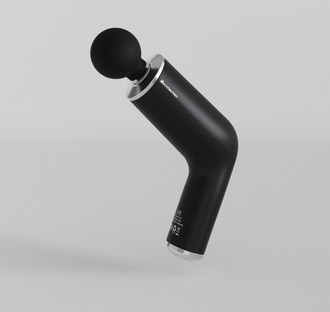
Recovapro Lite Massage Gun with Charging Mat
Percussion for your everyday routine.
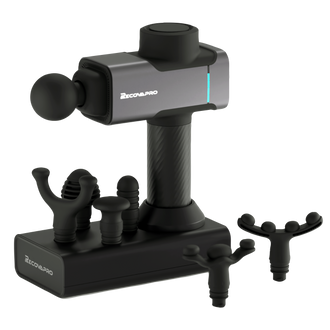
Recovapro Max with docking station
The flagship massage gun.