Your Cart is Empty


In this article
One cable station can support a varied workout without a long tour of the gym. Build around movement patterns first, then choose the exercises and attachments your station supports. You do not need every cable exercise in one session.
Start with five movement patterns
The American Council on Exercise uses squat, lunge, push, pull and rotation as the basis of its cable-machine workout. This is a way to organise exercise choices, not a requirement to perform a complicated circuit. [10]
Check the machine’s instructions, secure the attachment and choose a load you can move under control. Ask a qualified trainer to demonstrate unfamiliar setups before adding resistance.
Pull: a controlled seated row
ACE’s seated-row guidance uses a tall back, bent knees and elbows travelling back close to the rib cage. Draw the handle towards the front of the stomach, pause, then straighten the arms slowly. Avoid turning the exercise into a swinging pull with your torso. [11]
Push and lower body: choose the setup
ACE includes single-arm chest presses, squat-to-row and lunge-to-row variations. Choose versions that suit your experience and the available station; combining movements adds coordination demands. It is fine to practise one movement before pairing it with another. [10]
Rotation: keep the resistance manageable
Kneeling wood chops and hay-baler variations appear in ACE’s example. A rotating exercise should still look controlled. If you cannot keep the path consistent, reduce the load or ask a trainer to help with the setup. [10]
Turn the choices into a session
ACE’s published example uses two to four sets of ten to twelve repetitions with rest between exercises. Treat that as an example, not a prescription for every beginner or every machine. You can start with fewer exercises and build familiarity before adding volume. [10]
- Choose one exercise for each movement pattern you want to train.
- Practise the setup with light resistance before your working sets.
- Rest enough to repeat controlled technique; do not rush because another person is waiting.
- Stop if an exercise causes pain rather than ordinary muscular effort, and get appropriate advice.
Finish without turning recovery into a second workout
A massage gun is an optional addition after training, not a requirement to make the session count. It does not establish that your muscles have recovered or that another hard session is appropriate.
Start at the lowest intensity and let the attachment move slowly over muscle without pressing down. Stay away from bones and joints. Stop if use hurts or worsens symptoms. If you have an injury, a medical condition or uncertainty about suitability, ask your healthcare team first. [3]
For an optional post-training pause
Explore Recovapro Lite for an everyday routine, or the flagship Recovapro Max. Choose a format you can use comfortably, not a promise of faster healing.
Compare models · Explore the pain guides · Massage-gun instructions
Sources and further reading
- American Council on Exercise. Cable-machine workout built around squat, lunge, push, pull and rotation patterns.
- American Council on Exercise. Seated row: setup and controlled technique.
- Cleveland Clinic. Practical massage-gun guidance: low intensity, no added pressure, muscles rather than bone. Not used here as evidence for lactate-removal claims.
- Ferreira et al. (2023). Massage guns and performance/recovery: systematic review of 11 studies, with moderate or high risk of bias.
General information, not a diagnosis or a personal treatment plan. Commercial interest: Recovapro sells recovery devices. Written by The Recovapro Research Team. Reviewed 13 November 2026.
Explore the range
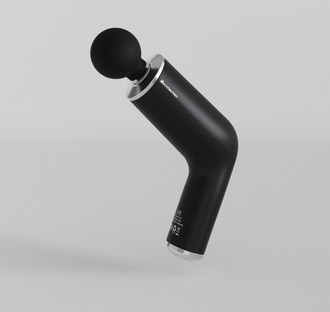
Recovapro Lite Massage Gun with Charging Mat
Percussion for your everyday routine.
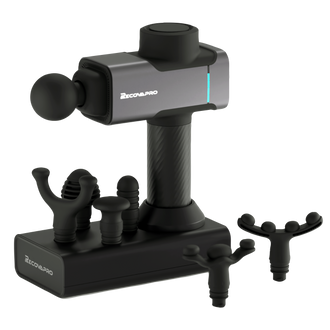
Recovapro Max with docking station
The flagship massage gun.